Sales Enquiries
+91 7240 444 666Sales Enquiries
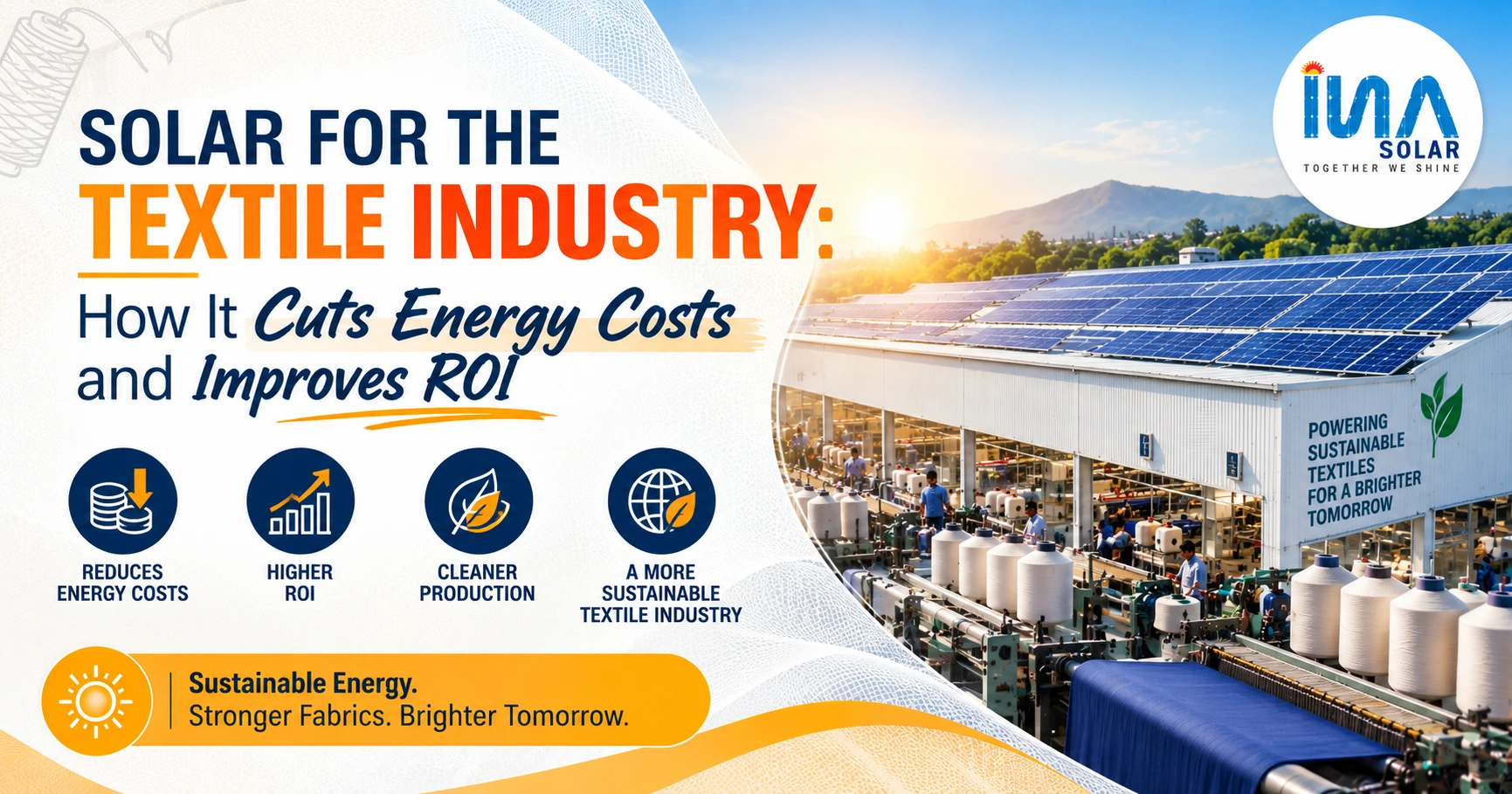
+91 7240 444 666Textile manufacturing is an energy-intensive business. From spinning and weaving to wet processing, dyeing and finishing, production depends on machinery and equipment that may operate for long hours. As a result, electricity is not simply another overhead - it can be a high and recurring operating cost.
For textile manufacturers, the challenge is not just to reduce energy consumption wherever possible, but also to manage the cost of the electricity required to keep production running. Even relatively small improvements in energy use or sourcing can therefore have a meaningful impact on overall operating expenses.
A TERI study of textile operations in Ahmedabad, Bhiwandi, Coimbatore, Surat and Tirupur indicated great headroom for improving energy efficiency, with estimated savings of roughly 8% in spinning, 5% in weaving and 10% in processing.
This highlights an important distinction for textile businesses: energy efficiency can help machines and processes consume less electricity, while solar can address another part of the equation - where a portion of that electricity comes from.
Almost all stages of textile manufacture require power. Spinning and weaving machines, motors, compressors, pumps, ventilation systems and dyeing equipment can all operate for lengthy periods. It means power consumption is a continuous cost that businesses cannot simply overlook.
Research from TERI reveals the huge scope for improvement in this situation. It has predicted that the adoption of efficient technology may possibly save roughly 2,132 million kWh a year in spinning and 734 million kWh in weaving across the sector.
However, reducing energy consumption and reducing dependence on purchased grid electricity are two different approaches. A plant may improve the efficiency of its equipment while also exploring solar to generate a portion of the electricity it requires.
Solar enables a textile industry to generate part of its electricity requirement on-site. When generation aligns with daytime operations, this power can be used within the facility, reducing the amount of electricity that needs to be purchased from other sources.
Solar may make a real difference to one of the most stubborn costs for the textile industry - power. The panels, on the roof of the facility, may generate power during daylight hours, when numerous spinning, weaving, pumping, and processing operations are already running. That means the plant may utilize more of its own solar electricity rather than purchase the same electricity from the grid.
Rooftop vs Captive Solar for Textile Manufacturing: Which Option May Be Suitable?
The suitability and impact of solar will depend on the plant's electricity demand, operating pattern, available installation area, location, and the size of the system. For facilities where rooftop space cannot support the required capacity, other models such as captive or group-captive projects and open-access renewable electricity may also be worth evaluating.
The financial value of solar depends on how much of the generated power can be used by the facility and the cost of the electricity it replaces. Savings will therefore vary based on factors such as tariffs, energy demand, location, and system size.
This can also provide some protection against increasing electricity rates over time, as sunlight does not come with a fuel charge. However, the actual savings will vary from facility to facility and will depend on factors such as tariff, location, electricity use, and system size.
Solar ROI depends on several factors, including system cost, expected generation, electricity tariffs, plant demand, maintenance, financing, and applicable charges.
Wheeling or banking charges and open-access charges for larger projects could also impact the final calculation.
For example, a 1 MW solar plant may generate around 1.4 million kWh annually. If each unit offsets electricity costing ₹7, the gross energy-cost offset could be approximately ₹98 lakh per year.
However, this ₹98 lakh figure is only an illustrative example, not a promised saving or standard ROI. Actual savings and returns will vary depending on factors such as the project's location, electricity tariff, generation, system performance, financing, and applicable charges.
The growing interest in solar is part of a broader shift in how Indian industries are approaching energy costs and long-term energy planning. As industrial facilities look for ways to manage electricity expenditure, rooftop and other solar models are increasingly becoming part of the conversation.
According to the industry data cited in the original research, India added 36.6 GW of solar capacity, taking total capacity close to 136 GW. Rooftop solar also saw strong growth, with 7.1 GW of capacity added and industrial users contributing significantly to adoption.
For textile manufacturers, the growing adoption of solar reflects its increasing relevance as part of a broader approach to managing long-term energy costs and planning future energy requirements. It does not, however, mean that the same solution or economics will apply to every facility.
Solar can also offer benefits beyond the immediate electricity bill. Generating a portion of power on-site may help businesses plan energy expenditure more effectively, reduce reliance on grid electricity and lower emissions associated with purchased power. This may also support sustainability objectives and respond to evolving customer or export-market expectations.
India's wider focus on industrial energy efficiency also provides important context. The PAT scheme of the Bureau of Energy Efficiency covers a significant share of industrial energy use, and the original research notes that 1,333 authorised consumers achieved energy savings of 25.78 million toe in 2025. Solar and energy-efficiency measures can therefore be viewed as complementary approaches rather than alternatives.
For textile manufacturers, choosing solar equipment is closely linked to the practical requirements of the facility. Available roof space, energy demand, project scale and the type of module technology can all influence what may be suitable.
For textile manufacturers, module selection can depend on practical factors such as available installation space, energy requirements and project scale. INA Solar's product range includes TOPCon, monofacial and bifacial modules from 500–635 Wp, allowing different options to be considered based on these requirements.
TOPCon technology and higher-wattage modules may be particularly relevant where a facility wants to generate more power from limited installation space. Monofacial modules can suit conventional installations, while bifacial modules may offer additional generation potential where project conditions allow them to capture reflected light from both sides.
For larger textile projects, manufacturing capacity can also be an important consideration in terms of meeting module requirements at scale. INA Solar currently has an annual module manufacturing capability of 5.5 GW. The company's automated manufacturing processes and AI-assisted quality checks are intended to support consistency in production and quality control. These capabilities give textile manufacturers practical factors to consider when evaluating module options for their specific project requirements.
For textile manufacturers, solar should be evaluated as part of a broader energy strategy alongside measures to improve operational efficiency. The potential value of a project will depend on the facility's consumption profile, available space, electricity costs, system design and project economics.
The financial case for solar will differ from one facility to another. Electricity tariffs, daytime consumption, available space, system size, financing and applicable charges can all influence the outcome and ROI.
As solar adoption continues to grow across Indian industry, textile businesses have an opportunity to assess where it fits within their own energy strategy. A practical evaluation should begin with the plant's actual electricity use and operating requirements, followed by an assessment of the technical and economic suitability of the available solar options.
Yes, solar can reduce grid electricity consumption, helping textile manufacturers lower operating costs and improve long-term energy cost predictability.
Spinning, weaving, dyeing, finishing, pumping, ventilation and other electricity-intensive operations can benefit from on-site solar power generation.
Solar ROI depends on system cost, annual generation, electricity tariffs, plant demand, maintenance, financing, applicable charges and project lifespan.
Yes, larger textile facilities can consider captive, group-captive or open-access solar when available rooftop space cannot meet their requirements.
INA Solar offers TOPCon, monofacial and bifacial modules for commercial and industrial applications, supported by its manufacturing capabilities, automation and AI-assisted quality checks.
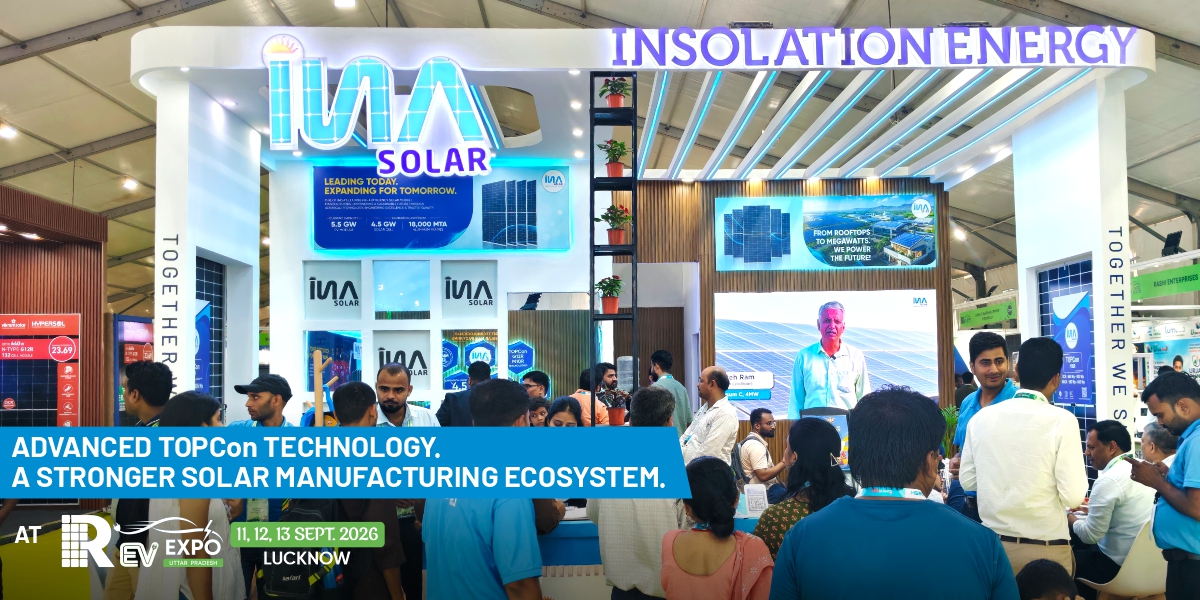
From G12R TOPCon Technology to a Growing Solar Manufacturing Ecosystem

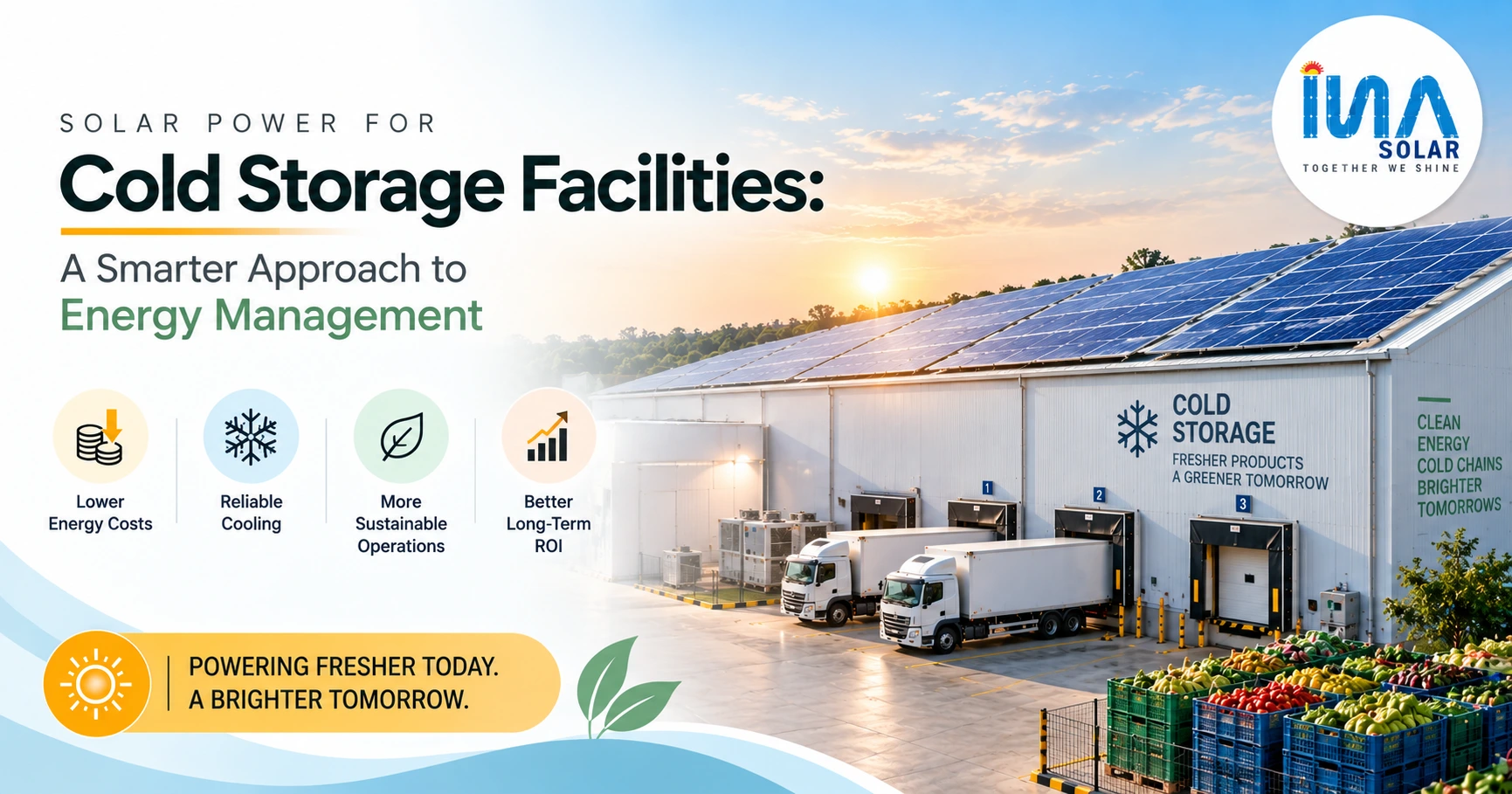
Solar Power for Cold Storage Facilities: A Smarter Approach to Energy Management

PM JANMAN Yojana: How India Is Bringing Solar Power to Its Most Vulnerable Tribal Communities


For Sales Enquiries

Email Address