Sales Enquiries
+91 7240 444 666Sales Enquiries
+91 7240 444 666Nearly 2,500 villages across India still sit beyond the reach of the power grid — not because of neglect, but because of geography. Dense forests, hilly terrain, and scattered hamlets make it technically and economically unviable to run transmission lines to many Particularly Vulnerable Tribal Group (PVTG) settlements. For decades, this meant millions of tribal households simply lived without electricity.
The Pradhan Mantri Janjati Adivasi Nyaya Maha Abhiyan (PM JANMAN) is the Government of India's answer to that gap — and solar energy sits right at the centre of it. This blog breaks down exactly what the scheme covers, the real numbers behind it, and how India's solar manufacturing capacity, including companies like Insolation Energy (INA Solar), plays a role in making schemes like this possible.
PM JANMAN was launched to address the developmental needs of Particularly Vulnerable Tribal Groups through eleven critical interventions, coordinated across nine central line ministries. It's a mission-mode approach — rather than one scheme, it's a coordinated push covering housing, roads, healthcare, education, and energy access for some of India's most remote tribal communities.
Energy access is one of its most ambitious components, precisely because grid electrification simply isn't feasible for many PVTG habitations. That's where the New Solar Power Scheme under PM JANMAN, administered by the Ministry of New and Renewable Energy (MNRE), comes in.
According to MNRE's official scheme page, here's exactly what has been sanctioned:
This isn't a pilot or symbolic gesture — it's a fully budgeted, multi-year national scheme with defined targets and a clear implementation timeline.
The Solar Power Scheme under PM JANMAN is built around three practical components, each designed for a different ground reality:
As of MNRE's latest published sanction data, several states already have confirmed household allocations under the scheme, including Chhattisgarh (1,284 households), Jharkhand (2,342 households), Madhya Pradesh (2,060 households), Tripura (1,703 households), and Andhra Pradesh (over 1,600 households across its two DISCOMs), alongside sanctions in Karnataka and Telangana. Eligible households simply need to approach their respective electricity distribution company to apply for installation.
The scale of the energy gap the scheme addresses is significant. Independent policy research has pointed to household electricity access among PVTGs sitting well below national rural averages, a gap that off-grid solar is uniquely positioned to close — since it bypasses the need for expensive grid infrastructure in terrain where laying transmission lines simply isn't practical.
Beyond electrification numbers, this scheme also connects to India's broader climate commitments, supporting the country's push toward higher renewable energy capacity while giving remote communities direct, tangible benefits — lighting, connectivity, and the ability to participate in India's growing digital and economic ecosystem for the first time.
Programs like PM JANMAN don't run on policy alone — they depend on a steady, reliable supply of quality-certified solar equipment, manufactured at scale, within India. This is where companies like Insolation Energy (INA Solar) fit into the larger picture.
As one of India's leading solar panel manufacturers, INA Solar operates a combined manufacturing capacity of 5.5 GW across its Jaipur facilities, with panels certified under ALMM, BIS, ISO, UL, and IEC standards — the same quality and compliance benchmarks that government solar schemes require from empanelled equipment. This isn't incidental: India's Approved List of Models and Manufacturers (ALMM) exists specifically to ensure that solar capacity built under public schemes uses domestically verified, quality-assured modules.
INA Solar's track record with government-backed solar programs isn't hypothetical either — the company has documented a 5.2 MW solar success story delivered under PM-KUSUM Component-C, demonstrating direct, real-world execution of a central government renewable energy scheme. That same manufacturing capability, quality certification, and on-ground delivery experience is what large-scale rural electrification missions like PM JANMAN depend on to actually reach the households they're designed for.
As India works toward its Net-Zero target by 2070 and its Atmanirbhar Bharat (self-reliant India) manufacturing vision, domestic solar manufacturers scaling up production — rather than relying on imported panels — directly strengthens the supply chain that schemes like PM JANMAN, PM-KUSUM, and PM Surya Ghar Yojana are built on.
PM JANMAN's Solar Power Scheme is one of the more quietly significant pieces of India's renewable energy push — not because of headline-grabbing capacity numbers, but because it's solving a genuinely difficult problem: bringing reliable electricity to households that grid infrastructure simply cannot reach. With ₹515 crore committed, one lakh households targeted, and sanctions already rolling out across multiple states, the scheme is a real, measurable step toward closing India's rural electrification gap. And behind every solar panel that reaches a remote PVTG household is a domestic manufacturing ecosystem — companies producing ALMM-listed, certified panels at scale — doing the less visible work of making schemes like this achievable.
PM JANMAN (Pradhan Mantri Janjati Adivasi Nyaya Maha Abhiyan) is a Government of India mission covering eleven critical interventions across nine ministries, aimed at improving development outcomes for Particularly Vulnerable Tribal Groups (PVTGs), including energy access through solar electrification.
The scheme has an approved financial outlay of ₹515 crore, targeting the electrification of one lakh un-electrified households across 18 states and one Union Territory.
It's a free solar lighting system — including LED bulbs and a fan — installed for scattered, un-electrified households in PVTG areas, with five years of maintenance included.
The Ministry provides central financial assistance of up to ₹50,000 per un-electrified household connected through a solar mini-grid.
18 states — Andhra Pradesh, Bihar, Chhattisgarh, Gujarat, Jharkhand, Karnataka, Kerala, Madhya Pradesh, Maharashtra, Manipur, Odisha, Rajasthan, Tamil Nadu, Telangana, Tripura, Uttar Pradesh, Uttarakhand, and West Bengal — plus the Andaman & Nicobar Islands.
Un-electrified households in PVTG areas can contact their respective electricity distribution company (DISCOM) to apply for installation and financial assistance.
Schemes like PM JANMAN rely on ALMM-listed, BIS and ISO-certified solar equipment manufactured at scale within India. Domestic manufacturers like Insolation Energy (INA Solar), which has already executed government-backed projects like a 5.2 MW installation under PM-KUSUM, help build the supply chain these rural electrification missions depend on.
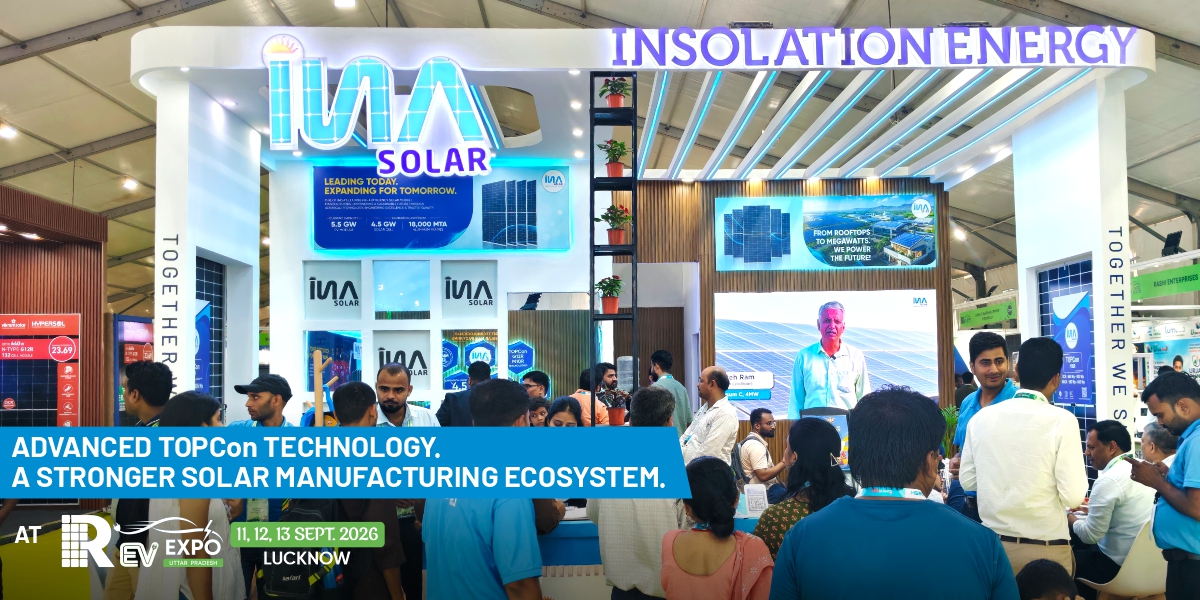
From G12R TOPCon Technology to a Growing Solar Manufacturing Ecosystem

Solar for the Textile Industry: How It Cuts Energy Costs and Improves ROI
Solar Power for Cold Storage Facilities: A Smarter Approach to Energy Management


For Sales Enquiries

Email Address


